

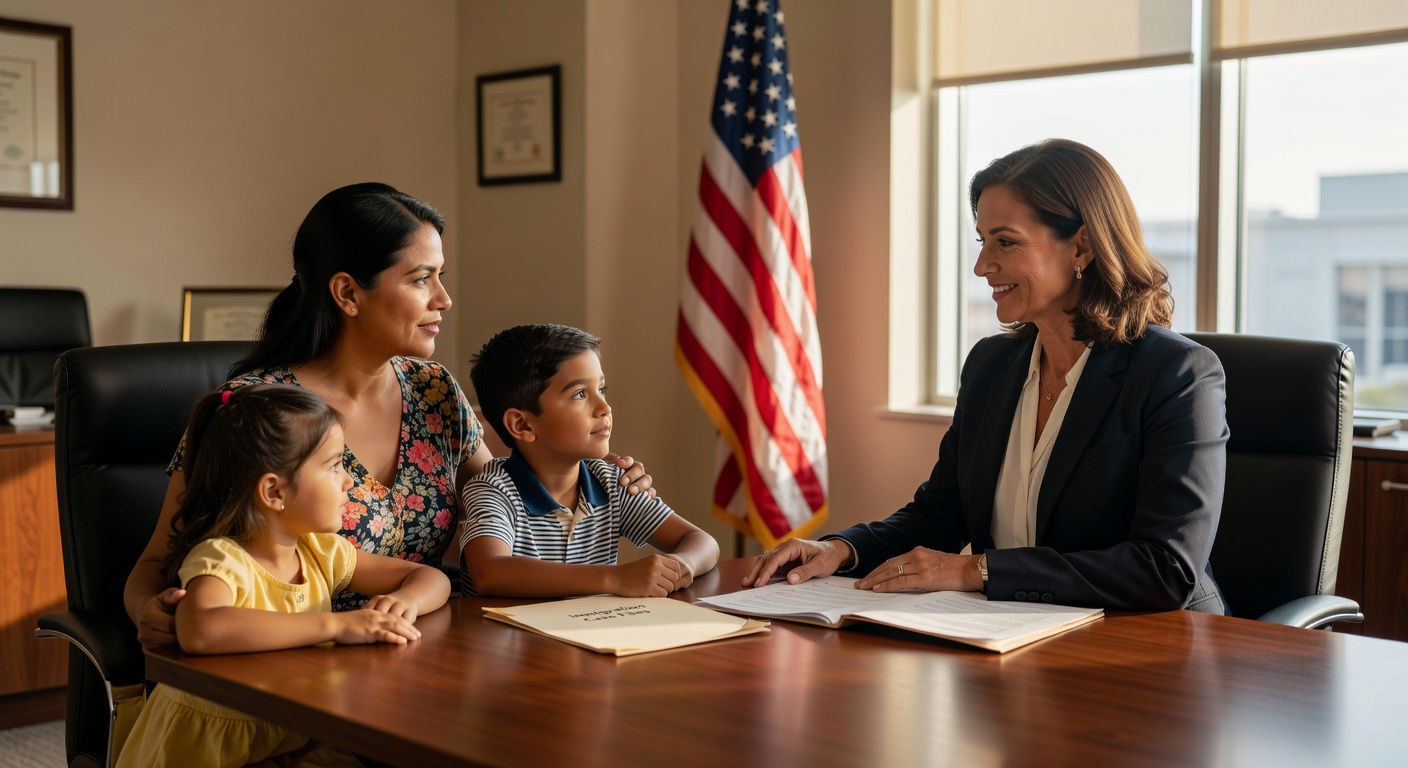
When a family member is undocumented, many people assume there is no legal path forward — no way to get papers, no way to stay in the United States. That assumption is often wrong. Three powerful federal protections — VAWA, the U-Visa, and the T-Visa — exist specifically for people in vulnerable situations who might otherwise have no route to legal status.
These programs were designed for people who have been abused, victimized by crime, or exploited through trafficking. They are not widely advertised, they require careful applications, and they are frequently misunderstood — but for the right cases, they can be life-changing.
This guide explains how each program works, who qualifies, and what you can expect from the process.
⚠️ Important Note
This article provides general educational information and does not constitute legal advice. Each case is different. If you or a family member may qualify for one of these programs, consult an immigration attorney before taking action. Missteps in the application process can have serious consequences.
VAWA: Protection for Abuse Survivors
VAWA stands for the Violence Against Women Act. Despite the name, it protects both men and women — any spouse, child, or parent who has been abused by a U.S. citizen or lawful permanent resident.
Normally, a foreign national who wants to immigrate through a U.S. citizen or LPR spouse must rely on that spouse to file a petition on their behalf. This creates an obvious problem when the sponsor is also the abuser — the victim is effectively trapped, dependent on their abuser to stay in the country legally.
VAWA solves this by allowing abuse victims to self-petition: to file for immigration protection on their own, without the abuser's knowledge, cooperation, or involvement. USCIS keeps these petitions confidential and does not notify the abusive spouse that a petition was filed.
Who Can File a VAWA Self-Petition?
You may be eligible if you are:
- An abused spouse of a U.S. citizen or lawful permanent resident (LPR)
- An abused child (under 21) of a U.S. citizen or LPR — or an abused adult child of a U.S. citizen if you are under 25 and the abuse is connected to the delay in filing
- An abused parent of a U.S. citizen (the abusive child must be 21 or older)
You must also demonstrate:
- You entered the qualifying relationship in good faith (if filing as a spouse)
- You suffered battery or extreme cruelty at the hands of the U.S. citizen or LPR family member
- You have lived with the abuser at some point
- You are a person of good moral character
📋 What Counts as "Extreme Cruelty"?
Physical violence is not required. USCIS recognizes that abuse can take many forms: psychological abuse, controlling behavior, isolation from family and friends, economic abuse (withholding money), threats of deportation, and sexual abuse all qualify. Document everything — records of police calls, medical visits, photos, text messages, and witness statements all strengthen your case.
What VAWA Provides
If your VAWA petition is approved, you receive deferred action status — meaning USCIS will not pursue your removal while your case is pending. More importantly, approval of the self-petition puts you on a path to lawful permanent residence (a green card).
Spouses and children of U.S. citizens who are approved under VAWA can immediately file for adjustment of status (green card) if a visa is available. Spouses and children of LPRs must wait for a visa number to become available, but they are placed in a preference category that generally has shorter waits than many other immigration categories.
VAWA and Divorce
You can still file a VAWA self-petition after divorce, as long as you file within two years of the divorce being finalized and the abuse was connected to the marriage. This is a critical protection for survivors who felt they had to stay in the marriage to maintain immigration status.
Experiencing Domestic Abuse and Worried About Your Immigration Status?
You have options. Our attorneys handle VAWA cases with complete confidentiality.
Get a Confidential ConsultationU-Visa: Protection for Crime Victims
The U-Visa was created by Congress in 2000 to protect immigrant crime victims and encourage cooperation with law enforcement. The logic is straightforward: when victims fear deportation if they report crimes, criminals operate freely in immigrant communities. The U-Visa removes that fear.
Unlike VAWA, the U-Visa is not limited to family abuse. It covers a wide range of crimes and is available to undocumented immigrants regardless of their relationship to the abuser or perpetrator.
Who Qualifies for a U-Visa?
To qualify for a U-Visa, you must meet all four of the following requirements:
- You were a victim of a qualifying crime that occurred in the United States or violated U.S. law
- You suffered substantial physical or mental abuse as a result of the crime
- You have information about the crime — you know what happened
- You have been, are being, or are likely to be helpful to law enforcement, prosecutors, or other government officials investigating or prosecuting the crime
What Crimes Qualify?
The list of qualifying crimes is extensive and includes:
- Domestic violence and assault
- Sexual assault and rape
- Human trafficking
- Kidnapping and false imprisonment
- Extortion and blackmail
- Murder and manslaughter
- Torture and stalking
- Witness tampering and obstruction of justice
- Female genital mutilation
- Involuntary servitude and peonage
- Fraud in foreign labor contracting
Also qualifying are attempts, conspiracy, or solicitation of any of the above crimes.
The Law Enforcement Certification Requirement
One of the most important — and sometimes most challenging — requirements for a U-Visa is obtaining a law enforcement certification (Form I-918B). This form must be signed by a qualifying law enforcement agency: police, prosecutors, judges, child protective services, the Equal Employment Opportunity Commission, and others.
The certification confirms that you have been, are being, or are likely to be helpful in the investigation or prosecution of the crime. This does not mean you must testify at trial — cooperation in an investigation is enough.
🔑 Key Point: You Do Not Have to Agree to Testify
Many people hesitate to pursue a U-Visa because they fear being required to testify against their abuser or exploiter. In most cases, you simply need to cooperate with the investigation — answering questions, providing a statement, or identifying a suspect. You can discuss the scope of your cooperation with an attorney before the law enforcement agency signs your certification.
What the U-Visa Provides
An approved U-Visa provides:
- Lawful nonimmigrant status for up to four years
- Work authorization — you can legally work in the United States
- Protection from deportation during your status period
- A path to a green card — after three years in U-Visa status, you may apply for lawful permanent residence
- Derivative status for qualifying family members — your spouse, children (under 21), and in some cases parents and unmarried siblings under 18 may also receive protection
The U-Visa Waitlist
There is an annual cap of 10,000 U-Visas per year. Demand far exceeds this cap, which means there is currently a waitlist of several years. However, being placed on the waitlist has significant benefits: USCIS typically grants deferred action to waitlisted applicants, which provides temporary protection from deportation and work authorization while you wait for a visa number to become available.
⏳ How Long Is the Wait?
As of 2026, wait times for U-Visa numbers have stretched to several years after petition approval. However, deferred action is usually granted relatively quickly after a complete petition is filed. This means you can often work legally and avoid deportation while waiting, even though the actual visa takes longer. An experienced immigration attorney can help you navigate the waitlist strategically.
T-Visa: Protection for Trafficking Survivors
The T-Visa is reserved for survivors of human trafficking — one of the most serious crimes in federal law. Human trafficking involves the use of force, fraud, or coercion to compel a person into labor or commercial sex acts. It is not the same as being smuggled into the country — trafficking involves exploitation, not just movement.
Trafficking survivors often face unique barriers: they may have been controlled by their traffickers, may not know their rights, and may be afraid of law enforcement due to threats from traffickers or their own undocumented status. The T-Visa was designed with these realities in mind.
Who Qualifies for a T-Visa?
To qualify for a T-Visa, you must show:
- You are or were a victim of a severe form of human trafficking — either sex trafficking or labor trafficking
- You are physically present in the United States, American Samoa, the Commonwealth of the Northern Mariana Islands, or a U.S. port of entry on account of the trafficking
- You have complied with any reasonable request for assistance in investigating or prosecuting trafficking — or you are under 18 years old (in which case this requirement is waived), or you would suffer extreme hardship involving unusual and severe harm if removed
- You would suffer extreme hardship involving unusual and severe harm if removed from the United States
Severe Forms of Human Trafficking Defined
Federal law defines severe forms of trafficking as:
- Sex trafficking: Recruiting, harboring, transporting, providing, obtaining, or maintaining a person for a commercial sex act, where the act is induced by force, fraud, or coercion, or where the victim is under 18 years old
- Labor trafficking: Recruiting, harboring, transporting, providing, or obtaining a person for labor or services through force, fraud, or coercion, for the purpose of subjection to involuntary servitude, peonage, debt bondage, or slavery
Common trafficking situations that qualify include: domestic workers held in homes without pay and without freedom to leave, agricultural workers forced to work in debt bondage, restaurant or hotel workers exploited through threats of deportation, and individuals forced into commercial sex.
What the T-Visa Provides
- Lawful nonimmigrant status for up to four years (extendable in some circumstances)
- Work authorization
- Eligibility for federal and state benefits — including refugee benefits in many states
- A path to a green card after three years in T-Visa status (or when the investigation closes, whichever is earlier)
- Derivative status for family members — spouses, children, parents (if you are under 21), and unmarried siblings under 18 may qualify
🔄 T-Visa vs. U-Visa: Which Applies to You?
If you were trafficked — held, controlled, or exploited through force, fraud, or coercion — the T-Visa is the right fit. If you were a victim of a crime (assault, domestic violence, kidnapping, etc.) but not trafficking, the U-Visa is the right path. If you were both trafficked and experienced other crimes, you may qualify for both. An attorney can help determine which is stronger for your specific facts.
Side-by-Side Comparison
| Feature | VAWA | U-Visa | T-Visa |
|---|---|---|---|
| Who It Covers | Abused spouses, children, parents of U.S. citizens or LPRs | Victims of qualifying crimes who cooperated with law enforcement | Survivors of human trafficking (labor or sex) |
| Annual Cap | No cap | 10,000/year (waitlist exists) | 5,000/year (rarely reached) |
| Requires Law Enforcement Cooperation | No | Yes (certification required) | Yes (with exceptions for minors and extreme hardship) |
| Work Authorization | Yes (after deferred action) | Yes | Yes |
| Path to Green Card | Yes — through adjustment of status | Yes — after 3 years in status | Yes — after 3 years in status |
| Family Members Protected | Derivative beneficiaries possible | Spouse, children, parents (if under 21), siblings under 18 | Spouse, children, parents (if under 21), siblings under 18 |
Practical Steps: What to Do If You Think You Qualify
Step 1: Document Everything You Can
Before meeting with an attorney, gather any evidence you have. This includes:
- Police reports, court records, or restraining orders related to the abuse or crime
- Medical records documenting injuries or treatment
- Photos of injuries or damaged property
- Text messages, emails, or voicemails from the abuser or trafficker
- Statements from witnesses (neighbors, family, friends, coworkers)
- Records of calls to domestic violence hotlines or shelters
- Any communications with law enforcement
If you have nothing — no documents at all — that is okay. Many survivors come forward with only their testimony. An attorney can help build the strongest possible case from what you have.
Step 2: Consult an Immigration Attorney Before Contacting Law Enforcement
If you have not yet reported the crime to law enforcement and need a law enforcement certification for a U-Visa, it is critical to speak with an immigration attorney first. An attorney can help you understand what cooperation means, what your rights are during any interview, and how to present your case in a way that supports your visa application without putting you in legal jeopardy.
Step 3: Be Aware of the Timeline
These applications take time. VAWA petitions are typically adjudicated within six to twelve months. U-Visa petitions may sit on a waitlist for several years, though deferred action can be granted much sooner. T-Visa processing times vary. An attorney can give you realistic expectations and help you understand what protections you have while your case is pending.
Step 4: Protect Your Safety First
If you are in immediate danger — from a domestic abuser, trafficker, or anyone else — your safety comes before your immigration case. Contact the National Domestic Violence Hotline (1-800-799-SAFE) or the National Human Trafficking Hotline (1-888-373-7888) for immediate help. These organizations can connect you with shelters, legal services, and safety planning resources, regardless of your immigration status.
Common Concerns and Misconceptions
"I'm afraid that applying will get me deported."
USCIS treats VAWA petitions confidentially and does not share information with immigration enforcement in a way that would lead to deportation while your case is pending. For U-Visa and T-Visa applicants, filing a complete petition typically triggers deferred action, which provides protection from removal. That said, if you have prior removal orders or other complications, speak with an attorney to understand your specific risk.
"My abuser has threatened to report me to immigration if I leave."
This is one of the most common tactics abusers use to control immigrant victims — and it is a crime. Using a threat to report someone to immigration authorities as a way to coerce them can constitute extortion or witness tampering. Document these threats. They can actually strengthen your VAWA or U-Visa case.
"I already left my abuser. It's too late."
It is not too late. VAWA allows petitions after the relationship has ended. U-Visas and T-Visas do not require that the crime or trafficking is ongoing. What matters is that it happened, that you can demonstrate it, and that you meet the other requirements. Past crimes are fully qualifying.
"I don't have a police report."
A police report is helpful but not always required. VAWA self-petitions do not require a police report — evidence of abuse from other sources is sufficient. For U-Visas, you need a law enforcement certification, but this can come from many agencies beyond just local police, including federal prosecutors, child protective services, and others. An attorney can identify the right agency and help you navigate the certification process.
Why Legal Representation Matters
These programs exist because Congress wanted to protect vulnerable people. But the applications are complex, the evidence requirements are demanding, and the consequences of mistakes — including denial or, in some situations, adverse immigration consequences — are serious.
An experienced immigration attorney can:
- Evaluate which program fits your situation and why
- Help you gather and present evidence effectively
- Navigate the law enforcement certification process for U-Visas and T-Visas
- Protect you from tactics abusers use to interfere with your case
- Manage your case through the waitlist or approval process
- Coordinate your immigration protection with any related criminal or family court proceedings
At Modern Law Group, we have handled hundreds of VAWA, U-Visa, and T-Visa cases. We work with clients across the country and understand that coming forward takes enormous courage. Our consultations are confidential, and we will never contact your abuser or trafficker in any way that could endanger you.
If you or a family member may qualify for one of these programs, call us at (888) 902-9285 or reach out through our contact page. You don't have to face this alone.
Think You or a Family Member Might Qualify?
VAWA, U-Visa, and T-Visa cases require careful handling. Our attorneys are experienced, confidential, and ready to help.
Request a Free ConsultationAdditional Resources and Support
If you are considering one of these programs, here are some additional resources that may be helpful:
- National Domestic Violence Hotline: 1-800-799-SAFE (7233) — 24/7 confidential support
- National Human Trafficking Hotline: 1-888-373-7888 — assistance for trafficking survivors
- Legal Aid Foundation: Search for free legal services in your area through the Department of Justice website
- USCIS Victim Assistance: Information on U and T visas available at uscis.gov/humanitarian
Remember that while these resources can provide immediate help and information, an experienced immigration attorney is essential for successfully navigating the application process and protecting your legal interests.
🚨 Emergency Contacts
In case of immediate danger, call 911. You have the right to safety regardless of immigration status. Police are required to protect victims of crime and domestic violence.